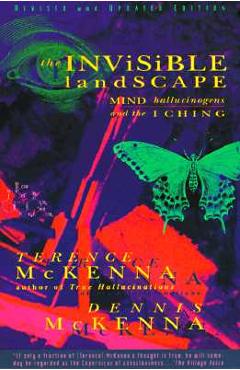
The Invisible Landscape: Mind, Hallucinogens, and the I Ching
229
Pagini
1993
An
Paperback
Copertă
Descriere
Chapter OneThe Figure of the ShamanOf all the diverse religious institutions that humans have elaborated since before the beginning of recorded history, that of shamanism is one of the most singular and is probably one of the most archaic as well. The shaman is something of a maverick among religiou...
Chapter OneThe Figure of the ShamanOf all the diverse religious institutions that humans have elaborated since before the beginning of recorded history, that of shamanism is one of the most singular and is probably one of the most archaic as well. The shaman is something of a maverick among religious practitioners. While shamanism occurs in virtually every culture on the planet, manifesting itself in religious traditions both ancient and modern, both "primitive" and sophisticated, the shaman remains eminently individualistic, idiosyncratic, and enigmatic, standing ever apart from organized ecclesiastical institutions while still performing important functions for the psychic and religious life of the culture. Comparable, but not identical, with such similar idiosyncratic practitioners as medicine men and sorcerers, the shaman is the possessor of techniques of proven efficacy and of powers bordering on the paranormal, the complete understanding of which still eludes modern psychology. It is this complex and fascinating figure of the shaman that we want to analyze from a standpoint at once sympathetic, interpretative, and psychological, with a view to answering the following questions: (1) What are the traditional aspects of shamanism as it is encountered in primitive cultures? (2) What is the nature of the shamanic personality and abilities, and what is the psychological role of the shaman in the society at large? And (3) Are there institutions analogous to shamanism in modern society?The vocation of shaman is found in nearly all archaic cultures, from the Australian aborigines to the Jivaro Indians of central Ecuador and Peru to the Yakut tribes of Siberia. It is believed to haveoriginated among these Siberian peoples, though its diffusion into other cultures must have taken place very early in prehistory for, along with sorcerers, magicians, and priests, shamanism can be counted among the oldest of professions.The word "shaman" is derived from the Tungusic term "saman, derived in its turn from the Pali "samana, indicating a possibly Southern (Buddhist) influence among these northern peoples (Eliade 1964, P. 4951). Eliade distinguishes the shaman from other types of religious and magical practitioners primarily on the basis of his religious function and techniques: ..". he is believed to cure, like all doctors, and to perform miracles of the fakir, like all magicians, whether primitive or modern. But beyond this, he is a psychopomp, and he may also be
Conectează-te pentru a lăsa o recenzie
Nicio recenzie încă
Fii primul care lasă o impresie.
Mai multe de Terence Mckenna
Vezi toate
True Hallucinations: Being an Account of the Author's Extraordinary Adventures in the Devil's Paradis

True Hallucinations. A Psychedelic Adventure, Paperback

The Fairy Faith in Celtic Countries: The Classic Study of Leprechauns, Pixies, and Other Fairy Spirits
True Hallucinations

The Evolutionary Mind: Conversations on Science, Imagination & Spirit, Paperback

Food Of The Gods
Food of the Gods: The Search for the Original Tree of Knowledge a Radical History of Plants, Drugs, and Human Evolution
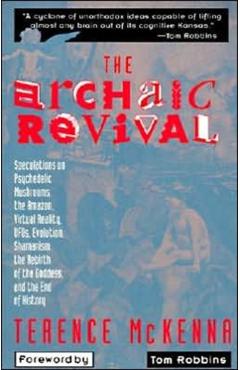
The Archaic Revival: Speculations on Psychedelic Mushrooms, the Amazon, Virtual Reality, Ufos, Evolut