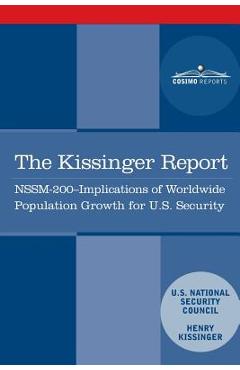
The Kissinger Report: NSSM-200 Implications of Worldwide Population Growth for U.S. Security Interests
130
Pagini
2019
An
Paperback
Copertă
Descriere
"World population growth since World War II is quantitatively and qualitatively different from any previous epoch in human history... total growth rates are close to 2 percent a year, compared with about 1 percent before World War II, under 0.5 percent in 1750-1900, and far lower rates before 1...
"World population growth since World War II is quantitatively and qualitatively different from any previous epoch in human history... total growth rates are close to 2 percent a year, compared with about 1 percent before World War II, under 0.5 percent in 1750-1900, and far lower rates before 1750."
-Executive Summary, The Kissinger Report
In 1974, the United States National Security Council, led by Henry Kissinger, completed a classified report, National Security Study Memorandum 200 - Implications of Worldwide Population Growth for U.S. Security and Overseas Interests A.K.A. The Kissinger Report. Due to the sensitive nature of its content, it took another 15 years before this report was declassified in 1989. The Kissinger Report's purpose was to describe and analyze population growth, especially in the least developed countries ("LDCs"), and the implications for U.S. national security.
This report forecasted world population to grow from 4 billion people in 1974 via 6.4 billion in 2000 to 12 billion in 2075. This kind of population growth was deemed unsustainable and would cause major problems: famines and ecological disasters; lack of economic development, civil unrest and mass foreign migration. This instability would be a threat to the countries involved, but also to the national interests of the U.S., since its import of minerals from those LDCs might be hampered.
The report called for measures to limit the population to 6 billion by the mid-21st century and to an ultimate limit of 8 billion people, and for the promotion of contraception among 13 populous countries, including Pakistan, Nigeria, and Mexico. When this report was declassified in 1989, this proposed population control policy, including abortion and the targeting of LDCs, triggered controversy. However, today in 2017, with the world population at 7.4 billion, and daily news covering civil unrest and worse in the Middle East, record numbers of global refugees, heat waves and changing weather patterns, the bird flu and zika virus, it seems the The Kissinger Report had at least predictive value.
Students of population studies, academics, journalists and anyone eager for a glimpse into the state of the world will find this essential reading.
Conectează-te pentru a lăsa o recenzie
Nicio recenzie încă
Ai citit cartea? Fii primul care lasă o recenzie!
Mai multe de Henry Kissinger
Vezi toate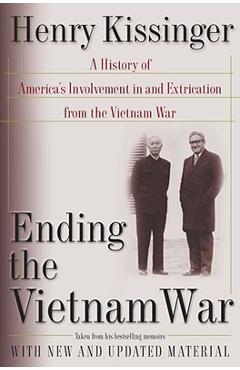
Ending the Vietnam War: A History of America's Involvement in and Extrication from the Vietnam War
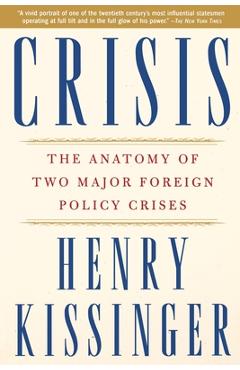
Crisis: The Anatomy of Two Major Foreign Policy Crises
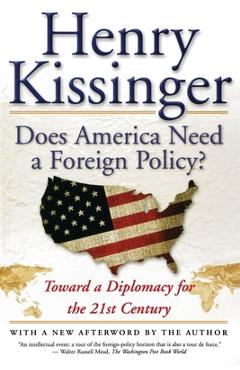
Does America Need a Foreign Policy?: Toward a Diplomacy for the 21st Century

Despre China
World Order

Ordinea mondiala

Ordinea mondială

Despre China
Leadership
Leadership