
The Edward Bernays Reader: From Propaganda to the Engineering of Consent
296
Pagini
2021
An
Paperback
Copertă
Libristo
Cel mai bunActualizat 1 lună în urmă
87.65
Lei
Libris
Actualizat 5 zile în urmă
116.58
Lei
Elefant
Actualizat 1 lună în urmă
118.99
Lei
Emag
Actualizat 4 luni în urmă
129.53
Lei
Emag
Actualizat 2 luni în urmă
156.00
Lei
Carturesti
Actualizat 2 luni în urmă
127.00
Lei
Descriere
*Bernays, Edward: * - A seminal and controversial figure in the history of political thought and public relations, Edward Bernays (1891-1995), pioneered the scientific technique of shaping and manipulating public opinion, which he famously dubbed "engineering of consent." During World War ...
*Bernays, Edward: * - A seminal and controversial figure in the history of political thought and public relations, Edward Bernays (1891-1995), pioneered the scientific technique of shaping and manipulating public opinion, which he famously dubbed "engineering of consent." During World War I, he was an integral part of the U.S. Committee on Public Information (CPI), a powerful propaganda apparatus that was mobilized to package, advertise and sell the war to the American people as one that would "Make the World Safe for Democracy. The CPI would become the blueprint in which marketing strategies for future wars would be based upon. Bernays applied the techniques he had learned in the CPI and, incorporating some of the ideas of Walter Lipmann, became an outspoken proponent of propaganda as a tool for democratic and corporate manipulation of the population. His best-known campaigns include a 1929 effort to promote female smoking by branding cigarettes as feminist Torches of Freedom and his work for the United Fruit Company connected with the CIA-orchestrated overthrow of the democratically elected Guatemalan government in 1954. He worked for dozens of major American corporations including Procter & Gamble and General Electric, and for government agencies, politicians, and non-profit organizations. Of his many books, Crystallizing Public Opinion (1923) and Propaganda (1928) gained special attention as early efforts to define and theorize the field of public relations. Citing works of writers such as Gustave Le Bon, Wilfred Trotter, Walter Lippmann, and Sigmund Freud (his own double uncle), he described the masses as irrational and subject to herd instinct--and outlined how skilled practitioners could use crowd psychology and psychoanalysis to control them in desirable ways.
Conectează-te pentru a lăsa o recenzie
Nicio recenzie încă
Fii primul care lasă o impresie.
Mai multe de Edward Bernays
Vezi toate
Propaganda

Crystallizing Public Opinion

Crystallizing Public Opinion

A Summary of Propaganda by Edward Bernays

Crystallizing Public Opinion

Crystallizing Public Opinion

Propaganda - Spanish Edition - Edicion Español

Propaganda: Original 1928 Edition
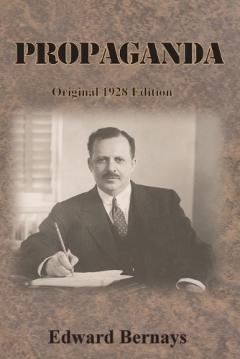
Propaganda: Original 1928 Edition

Crystallizing Public Opinion