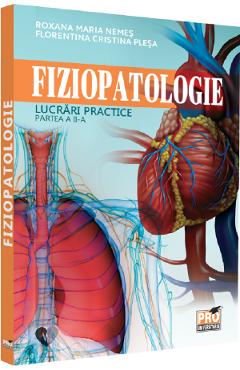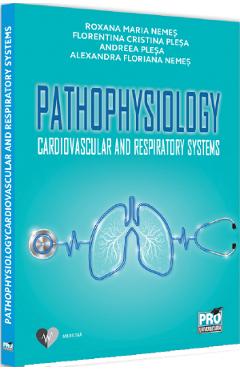
Pathophysiology Cardiovascular and Respiratory Systems
Roxana Maria Nemes, Florentina Cristina Plesa, Alexandra Floriana Nemeș, Andreea Plesa, Nemeș Roxana Maria, Plesa Florentina Cristina
186
Pagini
2023
An
Paperback
Copertă
Descriere
Table of contents:
Table of contents:
• Properties of the myocardium • Electrocardiogram: general aspects • Pathophysiology of atrial and ventricular overload • Pathophysiology of driving disorders • Pathophysiology of rhythm disorders • Pathophysiology of cardiac perfusion disorders • Heart exploration methods • Exploring the vascular system • Methods of functional exploration of the respiratory system - spirometry • References • ANNEX 1 - Elecetrocariograms • ANNEX 2 - Spirometries • ANNEX 3 - ECG interpretation
Fragment din cartea "Pathophysiology Cardiovascular and Respiratory Systems" de Alexandra Floriana Nemes, Andreea Plesa, Nemes Roxana Maria, Plesa Florentina Cristina:
Chapter V Pathophysiology of rhythm disorders Overview Normally, at rest, the heart rhythm is regular, with a heart rate of 60-100 beats/minute and is determined by depolarization of the sinus node :SN) = normal sinus rhythm
- any change in the normal sinus rhythm is called arrhythmia/ dysrhythmia and occurs through:
• the origin of the driving impulse outside the SN;
• rhythm disturbance;
• frequency change;
• impulse conduction impairment.
- arrhythmias can be: paroxysmal; sustained.
Arrhythmia can be asymptomatic or with various clinical manifestations such as:
• palpitations with an accelerated or slowed rhythm, regular or irregular, accompanied by unpleasant sensations or even a feeling of imminent death
• dizziness or short-term loss of consciousness (syncope) due to low cardiac output
• chest pain, angina especially in the case of fast-paced arrhythmias that increase oxygen demand over intake (often associated with coronary artery disease) • signs of decompensated heart failure or even sudden death in the event of an acute myocardial infarction or life-threatening arrhythmias
Arrhythmogenic factors - very important to identify, so that you can treat them D. drugs la ischemia S. sympathotonus H. hypoxia E. electrolitic disturbances S. stretch
Investigation of arrhythmias
• ECG- the best investigation for the diagnosis of cardiac arrhythmias;
• rhythm strips- longer routes on one or more derivations (choose the most eloquent derivation);
• Holter ECG over 24-48 hours or up to 2 weeks and recording symptoms in a diary to correlate with the ECG recording;
• ambulatory monitor which registers a derivation, usually precordial;
• event monitor which records about 5 minutes at the request of the patient when he has symptoms; can be implanted subcutaneously for a longer period (one year).
Conectează-te pentru a lăsa o recenzie
Nicio recenzie încă
Fii primul care lasă o impresie.